Goodreads Book Giveaway

Grandpa’s Horse and Other Tales
by Edward J. Lehner
Giveaway ends March 10, 2022.
See the giveaway details at Goodreads.
Giveaway ends March 10, 2022.
See the giveaway details at Goodreads.
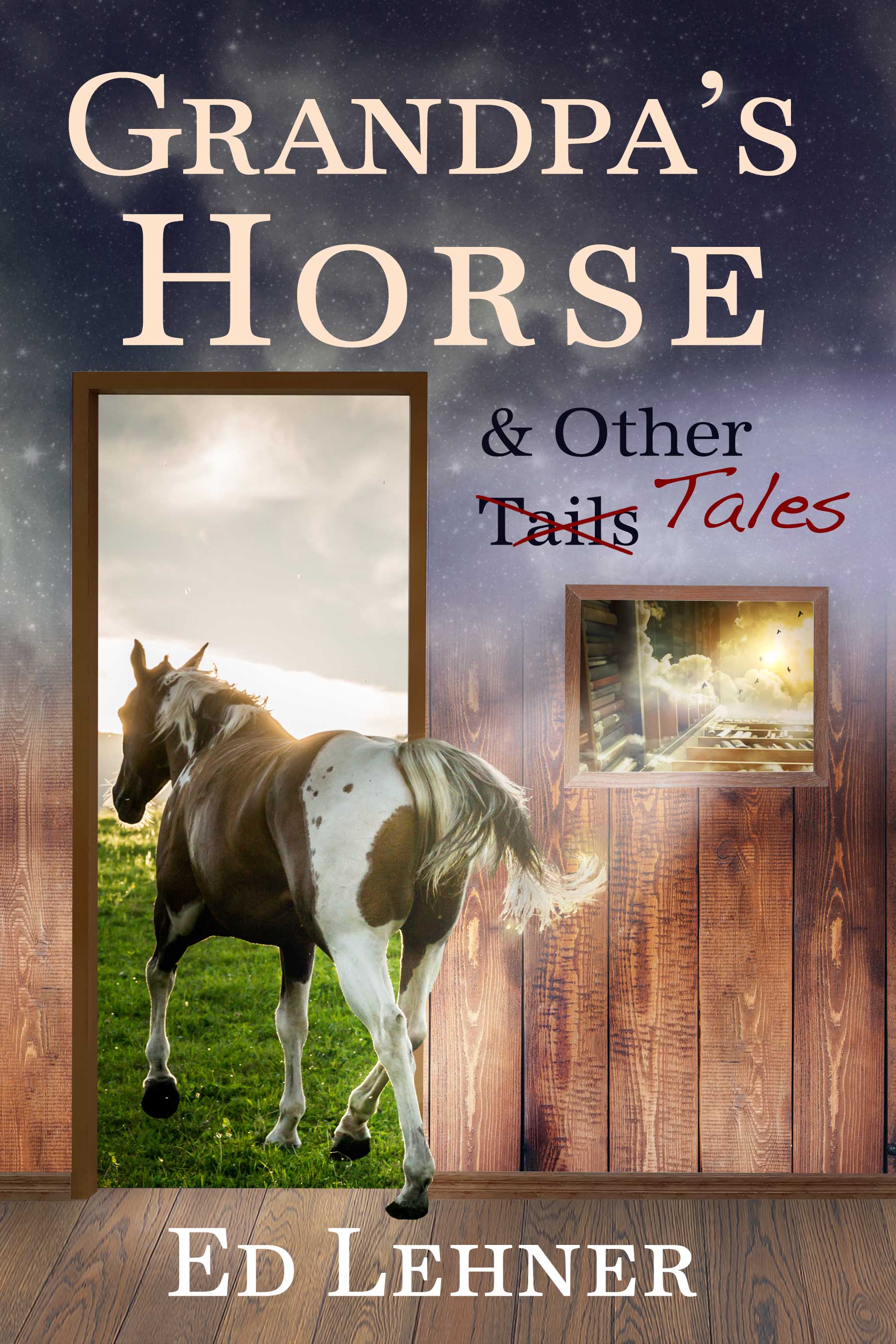
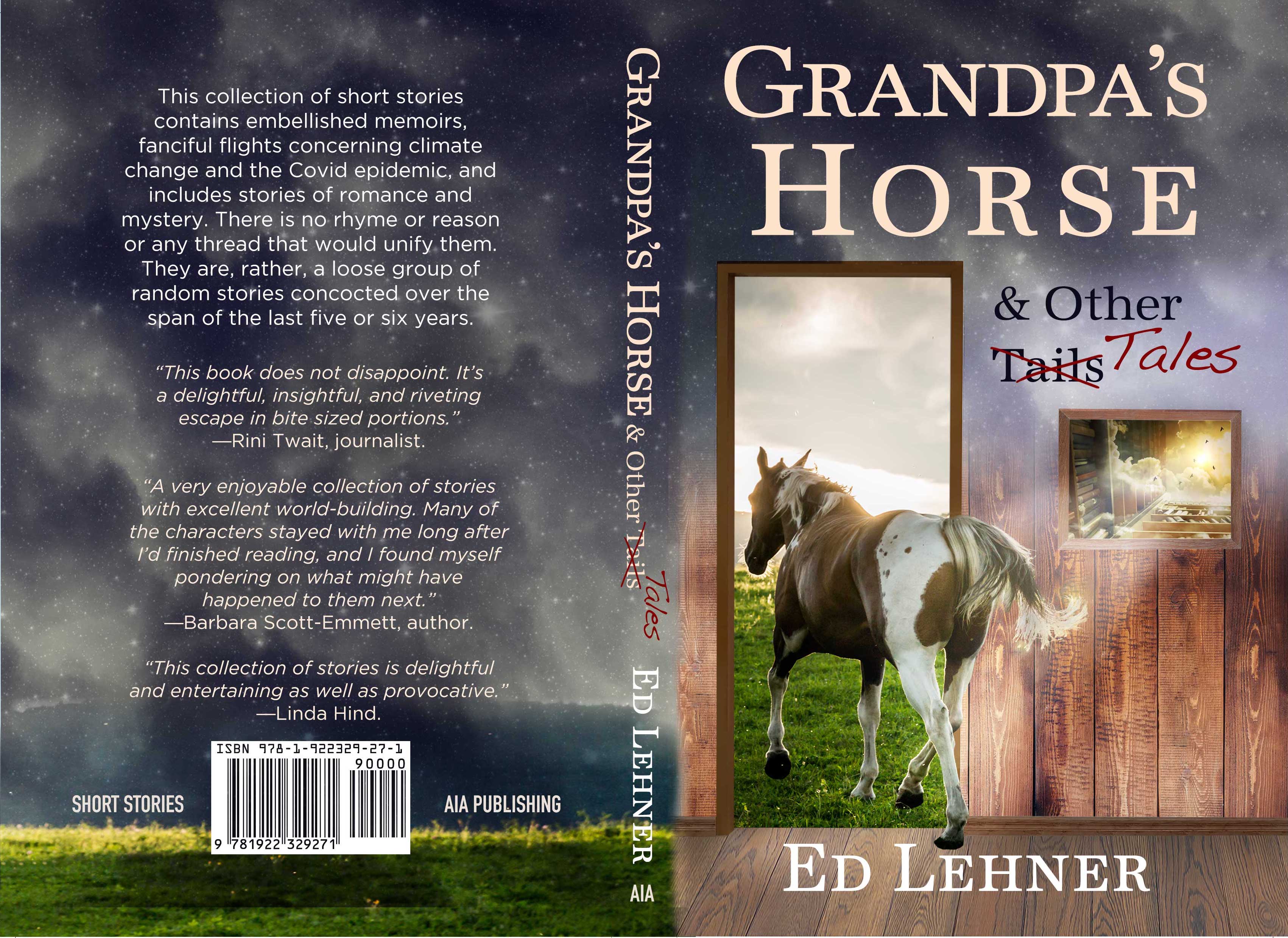
Grandpa’s Horse and Other Tales is available for a prerelease Kindle download for 0.99. Will be released March 4th.
Grandpa’s Horse is an anthology of short stories and memoirs plus a novelette. Stories include mystery, romance, covid, and fantasy.
I’m republishing my blog on Industrial Farming. Stay tuned for more reblogs.
I would classify most food in an modern supermarket as being produced by what I like to call, “Industrial Farming”. Rather than the mom and pop farms of fifty years ago where food was produced in a sustainable more organic process as I described earlier, today’s food is essentially produced in massive scale, much of it processed with most all natural vitamins and minerals removed in the process. Read the labels on your cereal boxes and see how vitamins and minerals are added. Why add something if the food already naturally has such ingredients naturally?
Being processed or not, corn and soy products are all laced with the petroleum based fertilizers, and chemically produced pesticides and herbicides, all of which transfers down the food chain.
An aside here, most all ground water in Iowa is now not safe for consumption. What I have read is that around 80% of all private wells are laced with previously mentioned fertilizers, pesticides, and herbicides. Swimming in or eating fish from Iowa lakes and streams is not recommended. So why is it then that food would be safe for human consumption? Two years before we moved from Iowa to Colorado, we hooked into the regional water line that had made it to our part of the county, even though we had a good well that supplied all our needs. When we listed our property, one of the first things prospective buyers asked was about where our water came from.
Beef, pork, and poultry are raised and finished in confined spaces. Hogs and poultry generally never see the sun since they are confined in cages from when they are weaned until they travel to the packing plants. In order to keep disease from running rampant in these cramped quarters, they are fed copious amounts of antibiotics which transfers down the food chain to the human consumers which can and does hinder antibiotics when administered to humans because humans have become immune from consuming it through the meat they eat. Confined livestock are also fed growth hormones for faster weight gain. What these animals ingest and transfer to humans cannot be a good thing. Bon Apétit.
Next, Solutions??? . . .
I worked for my dad until about 1960 when his health began to fail and he had to stop farming and rented it out, eventually selling it around 1963 or 1964. Meantime I began working in construction.
As years moved on, I was removed from the farm scene and lost track of what was happening. I do recall, however, the farming boom in the seventies when farmers were buying newer and bigger machinery, more land when they could get it, and even airplanes. High grain prices apparently spurred the boom, which came to bust in the early eighties when prices suddenly dropped. Many farmers were leveraged to the hilt from borrowing for machinery and land as well as extravagances such as airplanes. Land prices fell, foreclosures were abundant, there were farm sales every Saturday where you could buy a $50,000 piece of machinery for pennies on the dollar.
It wasn’t until the mid-nineteen eighties when I began teaching design at Iowa State University, a Land Grant University specializing in arts and sciences including agriculture, that I began to see what was happening.
The few farmers that had made it through the early eighties downturn had bought more land at cheap prices. Corporations and millionaires were buying land for tax shelters. Bigger, larger farms made small farms a thing of the past. Enter Monsanto, Cargill, DeKalb, and other seed and fertilizer giants who convinced the farm community about mono-culture farming, aka corn and soybeans, through the use of their seed, fertilizers, and pesticides which caused the once fertile soil to become lifeless by itself and could only produce crop yields by using the now ‘patented’ seeds and the accompanying fertilizers and pesticides. It became a racket that sucked farmers into the game and once in, it was difficult if not impossible to get out. Local landowners again had large loans for the land and giant machinery to farm 1000 acres, which was now considered a small farm. Distant investors wanted a return on the land they had bought and were renting out for more acreage for the locals. Sort of like the song, Hotel California. Once you were there you could never return. Sustainable was a thing of the past.
One final thought for this part, in the 1990s, someone donated a considerable amount of money to the Iowa State College of Agriculture with the stipulation that it be used to create the Aldo Leopold School of Sustainable Agriculture. (From Wikpedia: Aldo Leopold January 11, 1887 – April 21, 1948) was an American author, philosopher, naturalist, scientist, ecologist, forester, conservationist, and environmentalist. He was a professor at the University of Wisconsin and is best known for his book A Sand County Almanac (1949), which has sold more than two million copies.)
As the story goes, the president of Monsanto called the ISU president letting him know that if this sustainable agriculture school moved forward, all Monsanto research funds would be immediately pulled. With the amount of research funding from Big Ag Corporations, the school of sustainable agriculture never happened. It goes to show the control large corporations exercise over research facilities such as Iowa State and how they skew research to meet their needs. Sustainable farming was not one of them.
Next, Our food today . . .
Dive into a collection of memories, musings and emotions delicately concocted into stories and introspective articles
This and That...
Musings on cats, travel, gardens and life
We are all just babes in the woods.
A deaf person who has been pleasantly stuck in a dimension between dream and reality, where my sign language turns into written poems.
reading, ranting and reviewing
Author / Activist / Healer
In search of spirituality
Words To Think On
Welcome to a blog about our outdoor experiences.
Written by Katrina Cain
poetry/poem, essays, writing everything I adore or not so:-)
As I navigate through this life ...
Live A Visible Life Whatever Your Health
A Storyteller’s Dream
Literary Pasta, made with aromatic earnestness , served by an overthinking mind.
journeys of the mind and body
 Ed's Pages